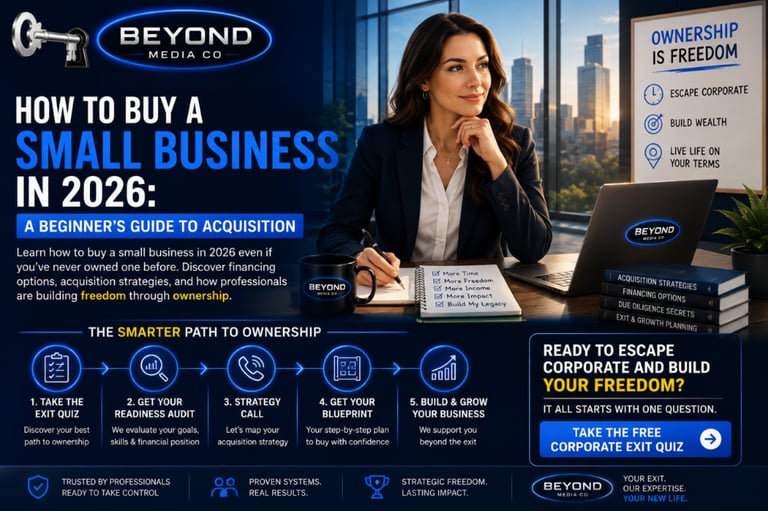
How to Buy a Small Business in 2026: A Beginner’s Guide to Acquisition Entrepreneurship
Learn how to buy a small business in 2026 even if you’ve never owned one before. Discover financing options, acquisition strategies, and how professionals are building freedom through ownership.


For decades, most professionals believed entrepreneurship meant starting a business from scratch.
Come up with an idea.
Build a product.
Find customers.
Hope it works.
But in 2026, a growing number of professionals are choosing a different path:
Buying Existing Businesses
Instead of building from zero, they are acquiring businesses that already have:
customers
revenue
systems
employees
operational infrastructure
This strategy is becoming increasingly popular among:
corporate professionals
executives
consultants
investors
entrepreneurs seeking more predictable ownership opportunities
And for many people, it represents a smarter path toward:
financial freedom
ownership
income control
and long-term wealth creation
Take the Free Corporate Exit Quiz
Discover whether business ownership may align with your goals and future plans.
Why Buying a Business Is Growing Rapidly
Several major economic trends are driving this shift.
1. Corporate Burnout Is Rising
More professionals are feeling:
exhausted
overworked
uncertain about long-term career stability
Layoffs, restructuring, and AI disruption are causing many people to rethink traditional career paths.
2. Millions of Business Owners Are Retiring
A massive number of small business owners are approaching retirement age.
Many want to:
sell their businesses
transition ownership
preserve their legacy
This creates major acquisition opportunities for new buyers.
3. Ownership Is Becoming More Valuable
Professionals increasingly want:
income control
flexibility
equity
scalable wealth
long-term leverage
Business ownership provides opportunities traditional employment often cannot.
What Does Buying a Business Actually Mean?
Buying a business means purchasing an existing company instead of starting one from scratch.
Depending on the acquisition, you may acquire:
customer relationships
recurring revenue
operational systems
staff
inventory
branding
intellectual property
digital assets
Rather than spending years validating an idea, you step into an operating business that already has market demand.
Why Many Professionals Prefer Buying Over Starting
Starting a business often involves:
uncertainty
inconsistent cash flow
customer acquisition challenges
years before profitability
Buying an existing business may provide:
immediate revenue
proven systems
operational stability
historical financial data
For professionals leaving corporate environments, this can feel far more strategic.
Buying a Business vs Starting One
Many professionals now realize:
Entrepreneurship does not always require building from scratch.
Buying a business may allow owners to focus on:
optimization
growth
leadership
scaling systems
instead of:
survival
validation
constant uncertainty
👉 Related Blog:
Buying a Business vs Starting One: Which Is the Smarter Path to Financial Freedom in 2026?
Step 1: Understand Your Goals First
Before searching for businesses, clarify:
income goals
lifestyle goals
desired flexibility
risk tolerance
industry preferences
Some people want:
location freedom
stable cash flow
operational simplicity
Others prioritize:
aggressive growth
scalability
larger acquisitions
Your acquisition strategy should align with your desired future.
Step 2: Decide What Type of Business You Want
Popular acquisition categories include:
Service Businesses
Examples:
marketing agencies
cleaning companies
landscaping
consulting firms
Online Businesses
Examples:
eCommerce brands
content websites
SaaS companies
digital media businesses
Local Businesses
Examples:
gyms
salons
repair shops
restaurants
clinics
B2B Companies
Examples:
logistics
staffing
manufacturing
business services
The best businesses often have:
recurring revenue
stable demand
operational systems
strong margins
Step 3: Learn Basic Business Valuation
One of the biggest beginner mistakes is overpaying.
Business values are often based on:
annual profit
cash flow
growth trends
operational strength
customer concentration
industry demand
Common valuation methods include:
EBITDA multiples
seller discretionary earnings
revenue multiples
Understanding valuation basics is critical before buying.
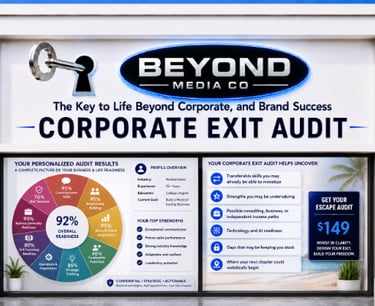
Get Your Corporate Exit Readiness Audit
Our Corporate Exit Readiness Audit helps professionals evaluate:
acquisition readiness
ownership opportunities
financial preparation
strategic next steps
Step 4: Explore Financing Options
One of the biggest myths about acquisitions is:
“You need millions of dollars.”
That is not always true.
Many acquisitions use:
SBA loans
seller financing
partnerships
investors
earn-out agreements
Some deals involve surprisingly low upfront capital depending on the structure.
What Is Seller Financing?
Seller financing means the current owner helps finance part of the purchase.
Instead of paying everything upfront:
you make payments over time
often using business cash flow
This is extremely common in small business acquisitions.
Step 5: Perform Due Diligence
Due diligence is the investigation process before buying.
This may include reviewing:
financial statements
tax returns
customer concentration
employee structure
contracts
operational systems
liabilities
growth opportunities
Skipping proper due diligence can create major problems later.
Step 6: Build a Transition Plan
The best acquisitions involve smooth transitions.
Many sellers stay temporarily to help:
train new owners
transfer relationships
explain operations
reduce disruption
This creates a more stable ownership transition.
Why Professionals Often Excel at Acquisitions
Corporate professionals already understand:
leadership
operations
systems
management
process improvement
These skills translate extremely well into business ownership.
Many professionals are far more prepared for acquisition entrepreneurship than they realize.
The Rise of Acquisition Entrepreneurship
Acquisition entrepreneurship is growing rapidly because it combines:
ownership
leverage
operational structure
existing cash flow
This appeals strongly to professionals seeking:
safer transitions
scalable income
strategic freedom
reduced startup uncertainty
Book a Founder Strategy Session
Want help building your business acquisition roadmap?
Our Founder Strategy Session helps professionals:
evaluate acquisition opportunities
understand financing
avoid common mistakes
build ownership strategies
create transition plans
⬇️ Book a Strategy Call ⬇️
What Happens After You Buy a Business?
Acquiring the business is only the beginning.
Growth becomes the next challenge.
Modern businesses increasingly rely on:
SEO
content marketing
YouTube
lead generation
authority branding
media systems
Businesses that dominate attention often create stronger long-term growth.
Growth & Media Services
We help business owners scale through:
SEO
YouTube strategy
lead generation
content systems
authority positioning
media growth
⬇️ Media & Growth Services⬇️
Explore Corporate Escape Blueprints
Ready to explore strategic ownership pathways?
Our Corporate Escape Blueprints help professionals:
understand acquisitions
evaluate opportunities
build transition systems
accelerate ownership
create long-term freedom


Final Thoughts
Buying a small business is becoming one of the fastest-growing paths toward ownership in 2026.
Instead of building from zero, professionals are acquiring:
cash flow
customers
systems
infrastructure
operational leverage
That shift is redefining modern entrepreneurship.
For many professionals, buying a business offers:
a more strategic transition
reduced uncertainty
faster ownership opportunities
and greater long-term control over their future
The future economy may increasingly reward:
not just hard workers…
but owners.
Frequently Asked Questions
Can I buy a business with no experience?
Yes. Many first-time buyers successfully acquire businesses by learning acquisition fundamentals and leveraging transferable professional skills.
How much money do I need to buy a small business?
It depends on the business and financing structure. SBA loans and seller financing may reduce upfront capital requirements.
Is buying a business safer than starting one?
An existing business may reduce certain risks because it already has customers, revenue, and systems in place.
What types of businesses are best for beginners?
Many beginners explore service businesses, local businesses, and companies with recurring revenue and simple operations.
What is acquisition entrepreneurship?
Acquisition entrepreneurship involves buying and growing existing businesses instead of building startups from scratch.